
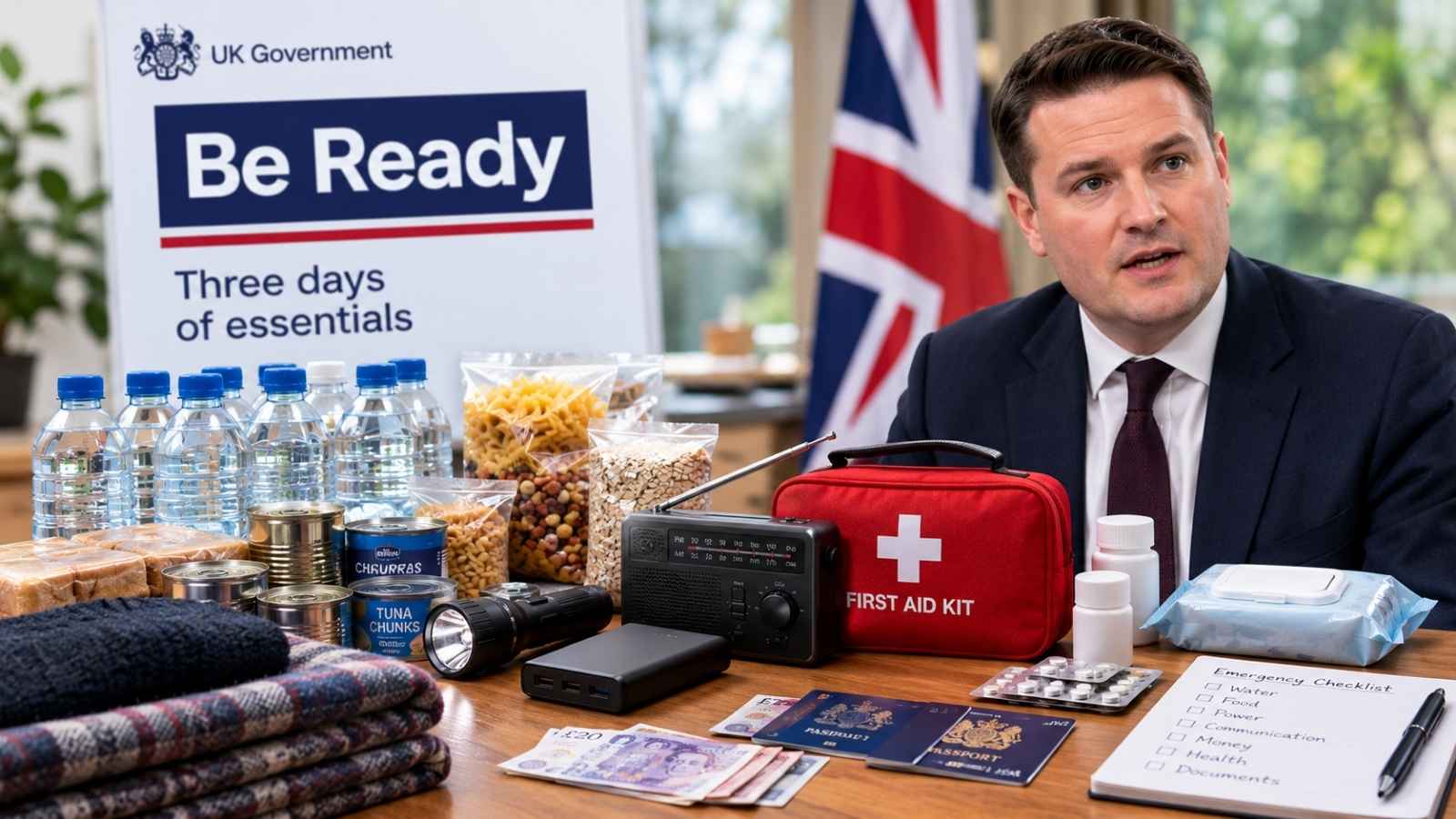
The UK government has launched a three-year public campaign called Be Ready, asking every household to hold enough essentials to cope for three days if everyday services are disrupted. Defence Secretary Wes Streeting fronted the launch on 22 October 2026 and defended it against suggestions that it amounts to scaremongering. The campaign arrived in the same week that a critical software flaw forced dozens of UK and European websites offline, giving the debate over national resilience a very real backdrop.
What Is the Be Ready Campaign?
Be Ready went live on 22 October 2026. The government describes it as a long-running effort to help households across the UK feel better prepared for disruption from threats such as cyber attacks, flooding and wildfires. Its central message is simple. Being ready for three days helps people manage while support reaches those who need it most.
Officials are keen to stress that nobody is being told to empty supermarket shelves. The guidance asks people to check what they already have, work out what is missing, and add items slowly during normal shopping trips to spread the cost. The checklist also suggests setting a reminder every six months to check expiry dates and swap out items that need replacing.
The Be Ready Campaign Checklist: What the Government Says to Keep at Home
The official Be Ready checklist covers the basics in several categories.
- Water: bottled water for three days, at 3 litres per person per day for drinking
- Food: non-perishable items that need no fridge or cooking, such as tinned meat, fish and vegetables, dried fruit and nuts
- Light, warmth and power: a torch with spare batteries, blankets, sleeping bags, warm clothing and a charged power bank
- Communication: a battery-powered or wind-up FM radio to receive updates during outages
- Money: cash in a mix of coins and notes, plus bank cards
- Health: a first aid kit, essential medication and other necessary medical supplies
- Babies: ready-to-feed formula, nappies and wipes. The guidance notes that ready-made formula is best because you may not be able to boil water safely
- Pets: pet food and bottled water for animals
- Hygiene: hand sanitiser, wet wipes and bathroom products
- Documents: copies of ID and important papers, written emergency contact numbers, and notes on regular medication and dosages
The guidance also advises requesting prescriptions up to five working days before you run out, and talking to neighbours about how you could support each other. Reports on the launch note that France, Ireland and the Netherlands use a similar three-day benchmark, according to the government.
What Did Wes Streeting Say?
Speaking at the opening of a new gun hall in Telford on Thursday, Streeting told the public he wanted people to be alert but not alarmed. He argued that the country needs to go a step further and ask whether households and businesses are prepared for more sophisticated cyber attacks, and for possible disruption to essential supply chains caused by hostile states or terrorists. He also asked how the public would cope if payment systems at a local supermarket went down.
Later, on BBC One’s Question Time, he said no single scenario lay behind the advice. He framed it as everyday national resilience, useful in a power cut or if a local shop were hit by a cyber attack. When an audience member suggested the campaign could trigger Covid-style panic buying, he said ministers had looked at what other European countries do and believe those countries are well ahead of Britain on preparedness.
Political and Expert Reaction
Reaction at Westminster has been split.
- Tom Tugendhat, the shadow foreign secretary, said it is a perfectly reasonable thing to ask people to keep provisions for several days.
- Alicia Kearns, the shadow national security minister, said the government should get its own house in order before lecturing the public, pointing to defence funding and energy security.
- Professor Harry Pitts of the University of Exeter welcomed ministers putting security threats in front of the public. He said the effort needs to be led from Downing Street downwards and tied to the national conversation on defence recommended in the Strategic Defence Review 2025.
Some headlines on the launch have framed the story around food shortages, while the official messaging focuses on short disruptions to services. Streeting himself said there was no specific incident in mind.
Why Now? The PHP Security Flaw That Took Websites Offline
The campaign launched amid a global scramble over two critical vulnerabilities in PHP, the programming language behind around 70 percent of websites, according to Cloudflare. The flaws, nicknamed PHP2Shell, could let attackers take remote control of web servers, including sites built on WordPress, Drupal, Joomla and Magento.
The National Cyber Security Centre (NCSC) warned UK organisations on 21 October to update PHP immediately, or consider taking affected systems offline if they could not. The result was a wave of precautionary shutdowns. Websites for UK councils, the Metropolitan Police and the Office for Budget Responsibility went dark, and government sites across Europe in the Netherlands, Finland, France and Denmark were also pulled.
A UK minister said 32 government services went offline and four were partially unavailable while checks and fixes were carried out. Officials said it is not standard practice to publish a list of affected services and that the picture was changing quickly as services returned. A government spokesperson said work was under way across government to identify and patch any exposure, and urged all organisations to follow NCSC guidance.
Streeting said incidents like this will happen more and more, and not only through foreign states engaged in espionage or sabotage. He pointed to organised criminals as well, and said AI brings both opportunities and new threats to conventional cyber defences.
What Should Households Do Now?
- Check your cupboards first. You may already hold much of what the checklist asks for.
- Build up slowly. Add one or two items per shop rather than buying in bulk.
- Keep some cash at home. The checklist includes coins and notes in case card machines or cash points fail.
- Sort medication and baby or pet needs. These are the items hardest to replace in a hurry.
- Set a six-month reminder to check expiry dates and refresh supplies.
- Talk to neighbours. Agree who might need extra help and what you could share.
What Happens Next?
Be Ready Campaign is planned as a three-year campaign, so expect more advertising, guidance and political argument over how far the state should ask households to do for themselves. The immediate test will be whether the launch calms or fuels nervousness, and whether shops see any unusual buying. Meanwhile, organisations still running PHP should keep applying patches and following NCSC advice.
Frequently Asked Questions
1. Is the UK government telling people to stockpile food?
It is asking households to keep three days of essentials, built up gradually. Ministers say the advice is about everyday resilience, not a specific threat.
2. How much water does the Be Ready checklist recommend?
The checklist says 3 litres per person per day for drinking, for three days. More will be needed for cooking and washing.
3. Should I keep cash at home?
Yes. The checklist includes a mix of coins and notes in case electronic payments or cash machines are disrupted.
4. Is the campaign linked to a specific emergency?
Streeting said there was no particular incident in mind. The launch did coincide with the PHP security scare.
5. Who is Wes Streeting?
He is the UK Defence Secretary and fronted the Be Ready launch.
6. Where can I find the official checklist?
It is published on the government’s Be Ready campaign website.
Explore more expert insights, leadership stories, and business strategies at GlobeVox Leaders